
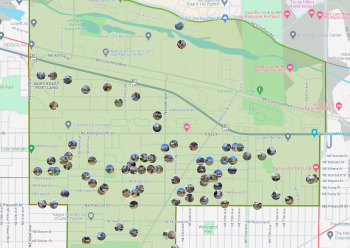
Inhabited Mobile Dwellings Survey 2024 (Cully Neighborhood, Portland, Oregon)
Four years ago, in June, 2020, I conducted the inaugural study of the rate of inhabited mobile dwellings on residential properties in the Cully neighborhood in Portland, Oregon. This study laid the groundwork for a follow-up survey I conducted four years later, which used the same parameters and methods.
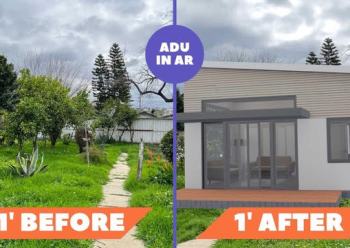
New ADU visualization app available
Explore 67 ADUs right in your backyard with augmented reality and iPhone or iPad.

THE BIG ADU WEST COAST DATASET
This may seem weird, but I’m giddy to share this big new ADU dataset from the West Coast with you. This is the first time that this big dataset has been presented to the public. Here, I will show why this particular data is so important, and explain why I’m proud to release it.
Getting my hands on this data from California, Oregon, and Washington was difficult. Making it presentable was also a challenge.

Innovative Ways to Develop ADUs that Intentionally Help Your Community
Building an ADU can be a way for you to build your wealth, which is a great individual motivator for their construction.
Meanwhile, for policymakers such as city council members or state legislators, allowing ADUs by liberalizing rules for their development will help solve the housing crisis. As rental units, ADUs typically provide financially attainable rental housing stock in residential neighborhoods simply due to their limited size.

ADU Legislative Initiatives- History in the Making (Part IV)
Washington State has passed very strong ADU legislation called HB 1337. Here’s a summary of some of things it does.
Under HB 1337, cities and counties must follow specific policies, including:
Not requiring owner occupancy
Permitting detached ADUs, not just attached ADUs.
Allowing at least two ADUs in all urban growth areas with single-family zoning.
Legalizes two story ADUs (24ft)
Limiting impact fees for ADUs to 50% of the fees for the principal unit.
Generally not imposing stricter limitations on ADUs compared to principal units.

One Year In, Are Tiny Houses on Wheels the New ADU in Portland?
We are one year into installing RV hookup infrastructure on residential properties in Portland for homeowners who are adding a mobile dwelling. We do this work through a company called Tiny Hookups LLC. This company was formed on the heels of the legalization of RVs (and tiny houses on wheels, which are classified as RVs under Oregon state law) as a legal dwelling option in Portland, Oregon, in 2021.

10 Ways Your ADU Can Support Your Retirement
As I’ve interviewed homeowners, designers, and builders about ADUs over the past several years, one thing that has impressed me is how many people are using an ADU as part of their retirement plan. ADUs can provide housing flexibility, additional income, one-floor living to age-in-place, proximity to family members and caretakers, or even just a place to call home when traveling.

Brooks & Brian’s ADU: Retirement Plan for Mom & Us
As Brian and Brooks explored various options for Brooks’ mother’s next housing situation, they determined an ADU would be the best option for both generations; an ADU would enable Brooks’ mother to retain as much independence as possible while having family close by, and it would be part of Brian and Brooks’ retirement plan, providing additional housing flexibility and income potential.
Amy Magyar’s ADU: Friend Next Door & Nest for Me
When Amy Magyar and her partner parted ways, her house felt too big. So she took out a home equity line of credit (HELOC) and transformed her carriage house into an ADU, doing most of the design and building herself, while preserving the building’s historic character. Amy’s friend from Baltimore, a self-declared “Covid refugee,” moved into the primary house, providing rental income for Amy.

Ruby Perry & Andy Simon’s ADU: Inspiration for the Neighborhood
Aging-in-place was a key design consideration for Andy Simon and Ruby Perry as they designed an ADU in their daughter and son-in-law’s backyard. Their one-story ADU incorporates doors with adequate clearance for a wheelchair. Ruby and Andy’s ADU was completely paid off in three years and it is now serving as Andy and Ruby’s dwelling, just as they’d intended. Three generations have created a web of mutual interdependence including childcare, gardening, and shared meals.

Design Your ADU Through Yestermorrow
Accessory Dwelling Unit Design (ADUD) will help you envision and design a backyard cottage, guest house, or in-law suite that meets your needs. We’ll virtually tour noteworthy accessory dwellings, spark a dialogue about space-saving strategies, and engage in an imaginative process with interactive design exercises. In the “design studio” you’ll learn a variety of tools to help you communicate your ideas. Students completing this course will have the skills necessary to continue work on their own ADU projects. Bring your curiosity, enthusiasm, and project ideas!
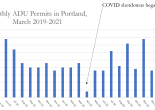
Portland, Oregon’s ADU Permit Data for 2020
As of July, 2021, there have been approximately 3,350 total permits issued for ADUs in Portland. Here’s the latest annual permit trend chart.

The Three Facts of California’s ADU Boom
Accessory dwelling units (ADUs) in California are “a revolution in progress,” in the words of researchers at the University of California’s Center for Community Innovation. A series of laws enacted over the past five years have systematically eliminated most explicit and implicit legal barriers to ADU construction across the entire state. Using data reported to the California Department of Housing and Community Development, I investigated likely economic and regulatory determinants of ADU growth across California cities.

Tiny Houses and RVs To Be Allowed as Housing in Portland
On April 28th, 2021, Portland’s City Council unanimously passed a new set of regulations that allows for recreational vehicles and tiny houses on wheels to be used as a legal, viable housing option on residential properties in the City of Portland beginning on August 1st, 2021.

Liberalized ADU laws must be defended in court
Recent legal developments show that we need to do more to ensure that permits are, in fact, being issued and new ADUs can be built.

Owner-Builder ADU by Kat and Dad
When we saw this fixer-upper on a half-acre plot of land, I knew right there and then: we were going to buy it. That was back in 2018, and my father started plotting the renovation strategy while exploring the property. One of its best features was the enormous unoccupied front yard, which seemed like a good spot for a second house. We were about to discover the secret world of ADUs and embark on an exciting journey of building one.

Designing an “oversized tiny” home for real-world, full-time living
As CEO of Backyard ADUs, a company that builds small homes and ADUs, I think about living in small spaces a lot. There are tons of cool and clever 200SF … Continue reading
ADU Legislative Initiatives- History in the Making (Part IV)
On August 12th, 2020, the City of Portland finally passed the Residential Infill Project. This was an overhaul of single family residential zoning regulations that was nearly five years in the making. This post will cover the changes that are coming with Residential Infill Project and also tease you with what is to come with Oregon’s House Bill 2001.

Rate of Inhabited Mobile Dwellings on Residential Properties in One Portland Neighborhood
In June, 2020, I conducted some voluntary research to determine how many single family residential properties had an inhabited mobile dwelling. The Cully neighborhood consists of 12,595 residents, or 4,685 households. My survey found 65 inhabited mobile dwellings located on residentially zoned lots, which translates to a rate of 0.005/resident.
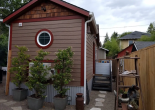
Roger & Martha’s tiny house — economical, artistic, and prefab
Prefab dwellings seem like a great way to create ADUs — but they’re not as common as you might think. One Portland resident shows how it can work.
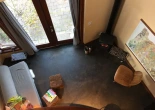
Accessory dwelling units and the coronavirus: can ADUs help?
The author is quarantined in his own accessory dwelling unit, during the coronavirus pandemic.

Rent Control, PDX Ordinances and Recent Legislation Impacting ADUs.
Over the past five years there have been new laws passed in Portland and Oregon targeting the residential rental market. This article will provide context on the passage of these laws, inform ADU owners how the laws affect their properties, and give guidance on how owners can best stay in compliance.
Incremental Updates for ADUs for 2020
Here’s some notable stuff for those interested in ADU minutiae in the Portland market and beyond. It’s a mashup of information and updates that will be of interest to ADU advocates: ADU Permit Numbers, MLS, Mapping ADUs, SDCs, ADU events in April 2020, Summit videos, oh my.

Carrie & Sterling Whitley’s ADU: Housing Stability for Two Generations
Two generations of the Whitley family found a solution to both their housing dilemmas when Carrie and Sterling were approved as the first residents of Monterey Bay Habitat for Humanity’s My House My Home program. The big idea behind the innovative My House My Home program is to build ADUs to assist low income senior homeowners who might be vulnerable to housing instability because they are living on a fixed income.

Evelyn Brom’s ADU: Another House for the Other Street
In 1995, Evelyn Brown purchased her property in Seattle, WA and immediately imagined building a second house on it. The property was a through-lot, meaning that it spanned the distance between two streets. Her house, at one end of the property, fronted on one street and her garage, on the other end of the property, fronted the other street. Twenty years later the city caught up with Evelyn’s vision and she now lives in an ADU she has plenty of time to dream about.

Diane Owen’s ADU: A Carriage House at My Daughter’s Place
A few years ago, Diane Owen was sharing a house in Denver, CO with her daughter Mara, and Mara’s partner Andrew. Diane’s one bedroom, one bathroom multi-generational household also included three dogs, so it was a full house! Diane had been living with Mara and Andrew for three years and they got along really well, but there were moments that a little more wiggle room would be nice.

Bertha’s ADU: A Tiny Cottage in My Son’s Backyard
Bertha and her son John had always been fairly close, but they lived their separate lives in different parts of St Petersburg, Florida. Each of them owned their own home and neither had plans to sell, but all that changed in 2016 when Bertha received a surprise offer from someone who wanted to buy her house.
ADU classes for Portland homeowners- postponed due to Coronavirus- Special offer for Portland Metro locals
Kol Peterson, one of the editors here, hosts a class called “Building An Accessory Dwelling Unit on your property,” on Please visit Kol’s site for more details.
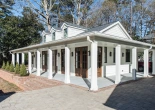
Walt Drake’s ADU: A Father-in-Law Unit in My Own Backyard
When Scott Drake bought his father Walt’s property in Decatur, GA they struck a deal. They’d build a carriage house for Walt so that he could remain on the property and have Scott and his wife and kids move into Walt’s old house.
ADU Advocates’ Unsanctioned Guidance for Oregon Cities Updating Local ADU Regulations by January, 2020 to Comply with HB 2001 Statute
Two of the most common “poison pills” in ADU standards will be prohibited statewide in Oregon beginning in January, 2020, making earlier ADU legislation significantly more effective.
Oregon House Bill 2001 (HB 2001) was signed into law on August 8th, 2019. While HB 2001 rightly claimed headlines for expanding missing middle housing options, it also included some specific requirements for ADUs.

Consider Going All-Electric For Your ADU
Natural Gas, or methane has been promoted both as a ‘Clean Fuel’ or a ‘Bridge Fuel’ in various circles, both locally and nationally during this time of climate crisis. Concurrently, the IPCC has called for a far more rapid decline in the use of fossil fuel, more rapid scaling up of renewable energy taking advantage of the falling costs, and avoiding a lock-in of high-carbon infrastructure.

Perspective: How to make accessory dwelling units affordable
ADU financing could — and perhaps should — be a lot more like commercial real estate financing, only with a human touch. A guest post by Roger A. Gins.
ADU Legislative Initiatives- History in the Making (Part III)
Several significant bills passed through the legislative process in California last week. This legislation that passed in CA is major and will help usher ADUs out of the dark ages.
ADU Legislative Initiatives- History in the Making (Part II)
As reviewed in my first post on this topical thread, significant and progressive legislative and regulatory ADU code overhauls are occuring at quickening pace in jurisdictions up and down the west coast. I’ve been tracking ADU regulatory reform fairly closely for a decade, and there hasn’t ever been a time period where ADUs have been gaining as much national traction as they are now.

Announcing the next Build Small Live Large Summit and the next ADU Academy. November 7th and 8th, 2019. Portland, Oregon.
Two national, back-to-back events on November 7th and 8th in Portland, Oregon

Recap of 2019 ADU Tour
The ADU Tour in June was a blast. Approximately 800 people attended. We’ve made the 17 project profiles public. You can find them here.
ADU Legislative Initiatives- History in the Making (Part I)
The 24-hour period from the afternoon of Sunday, June 29th- afternoon Monday, June 30th, 2019, was an important day for ADUs.
In the future, urban planners will point to that day as a signature moment for an era of deregulation and liberalization of codes for ADUs.
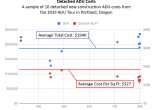
ADU Development Costs Keep Going Up
I’ve updated an extensive post about ADU development costs here. These updates are based new cost numbers that just came in from the upcoming 2019 ADU Tour in Portland, which serves as a repository of current and active primary source data for cost estimates. It turns out that current primary source data is critical when it comes to talking about the costs of ADUs, because the development cost numbers here keep escalating rapidly.

2019 is the Year of ADU Financing Innovation
Financing ADUs has remained a major challenge. But, in the future, 2019 will always be thought of as the year of ADU financing innovation. On April 29th, Portland State University convened a meeting in Washington, D.C to help flesh out some of the innovative programs that are being developed to finance ADUs.
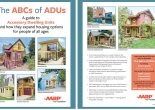
Free new guide: The ABCs of ADUs
Over the past year, I’ve been working with AARP to research and write “The ABCs of ADUs – A guide to Accessory Dwelling Units – and how they expand options … Continue reading

Seventeen ADUs!
I don’t know what I was thinking.I couldn’t help myself. I kept saying yes; I couldn’t resist. Now, look what I’ve done.Maybe you’re wondering what am I talking about. I’m talking about this year’s ADU Tour, of course!
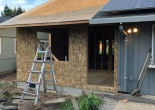
New ADU Financing Option with No Monthly Payments
One provider of ADU financing describes their service.

Announcing Accessory Dwelling Academy and The ADU Tour
On June 21st, 2019, we are running a new professional education event designed for builders, designers, lenders, realtors and appraisers who aspire to up their ADU game and stand out from the competition.

ADU Permit Trends in Portland in 2017 and 2018
This post details some findings about ADU permit trends in Portland.
First, we’ll start with the big picture. Here’s the latest data on the number of permits issued by the City of Portland for ADUs from 2000-2018. In 2017, 588 permits were issued. In 2018, 660 were issued. This is a total of 1248 ADU permits issued in 2017 and 2018.

Portland’s next ADU Tour is happening on June 22nd, 2019.
Portland’s next ADU Tour will be on Saturday, June 22nd Save the date! More tour information will be posted on AccessoryDwellings.org this winter.

ADU Rental Income Can Be Used to Qualify Borrowers to Purchase on HomeReady Loans
A HomeReady Mortgage is a Fannie Mae, first-time home buyer loan program, with minimum down payment requirements, and some very particular underwriting characteristics. When a borrower is purchasing a single-unit primary residence with a 3% minimum down payment and there is an ADU present, 75% of the potential rents from the ADU can be used to qualify.

Asmund & Jenny’s ADU
Asmund and Jenny had been considering building an ADU for quite a while and finally decided to take the plunge at the end of 2016. They were drawn by the potential for passive income, the need for more space for their growing family and guests, and they wanted to lock in the SDC fee waiver benefit before its scheduled expiration. They were particularly drawn to the short–term rental model to maintain the most flexibility.
ADU Legislative Initiatives Abound
SDC Waiver, Residential Infill Project, Oregon and California state legislative updates….
There are significant ADU legislative initiatives underway in California, Porltand, and Oregon at large. Each of these legislative efforts have national signficance.

St. Paul’s first ADU goes up
Over the course of a recent Saturday afternoon open house, more than 40 neighbors, friends and family stopped in to see a new apartment on Sherburne Avenue in the Hamline-Midway neighborhood and congratulate the owners, Eric and Chrissi Larsen, on its completion. This wasn’t just any apartment — it was the first accessory-dwelling unit to be built under St. Paul’s 2016 accessory-dwelling-unit ordinance.
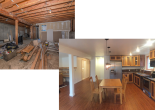
Basement/Garage Conversion Open House on Thursday, April 19th
For those of you in Portland, I’m having an open house event this Thursday, April 19th at my recently completed basement/garage conversion ADU from 4-7pm. I hope to see you there.
 Accessory Dwellings
You must be logged in to post a comment.